
What to Do If You Take the Wrong Medication? Step-by-Step Safety
Accidentally taking someone else's prescription or the wrong bottle? Learn what to do if you take the wrong medication, key emergency signs, and who to call immediately.
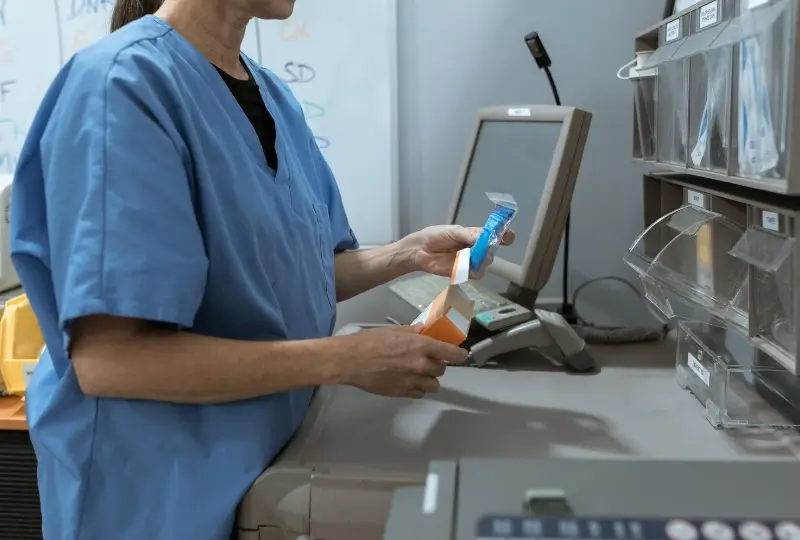
What to Do If You Take the Wrong Medication
Accidentally grabbing the wrong prescription bottle, swallowing a family member’s pill, or confusing morning and nighttime medications can happen easily. Taking an unintended medication introduces risks of adverse drug interactions, organ stress, or severe allergic reactions. Following immediate safety protocols ensures your physical safety.
Check for Immediate Emergency Red Flags
First, determine if the ingested medication presents an immediate medical emergency.
Call 911 or go to an emergency room right away if you notice any of these severe symptoms:
Severe allergic reactions: Swelling of the lips, tongue, or throat, hives, or difficulty swallowing and breathing.
Dizziness or loss of consciousness: Feeling faint, extreme lethargy, or inability to stay awake.
Neurological changes: Confusion, slurred speech, tremors, or loss of coordination.
Heart symptoms: Unusually rapid, pounding, or extremely slow heart rate, or chest discomfort.
Identify the Incorrect Medication Taken
If no emergency symptoms are present, gather precise details about the mistake before seeking professional advice:
Identify the exact drug name: Read the label of the pill bottle that was mistakenly taken.
Check the dosage strength: Note the milligram strength printed on the container.
Identify pill markings: If the pill was loose, note its shape, color, and any imprinted numbers or letters.
Note the quantity: Estimate how many tablets or fluid ounces were swallowed.
Call Poison Control or Your Local Pharmacist Immediately
Do not adopt a "wait and see" approach. Immediately contact Poison Control (1-800-222-1222 in the US) or your local pharmacy.
Inform the specialist of:
The exact name and dose of the wrong medication taken.
Your age, weight, and existing health conditions.
Your regular prescription list (to check for dangerous drug interactions).
The exact time the error occurred.
Avoid Dangerous Unsupervised Corrective Measures
Attempting to undo a medication error without professional medical oversight can lead to secondary complications.
Do not induce vomiting: Forcing yourself to vomit can cause damage to the esophagus or lead to lung aspiration.
Do not take "counter-medications": Never attempt to offset the wrong medication by taking extra doses of your intended prescription or over-the-counter remedies.
Do not drink excessive fluids or chemicals: Avoid drinking home remedies, salt water, or large volumes of milk unless explicitly directed by Poison Control.
FAQ
What if I took my partner's or family member's medication by accident?
Identify the exact name and milligram strength of their medication immediately and contact Poison Control. Because prescription dosages are tailored to individual body weights and health profiles, taking another person's drug requires immediate expert evaluation.
How long does it take for a wrong medication to leave your system?
It varies depending on the drug's absorption rate and half-life. Some short-acting drugs clear within a few hours, while extended-release formulations release active chemicals over 12 to 24 hours, requiring longer medical observation.